Neander on the Path

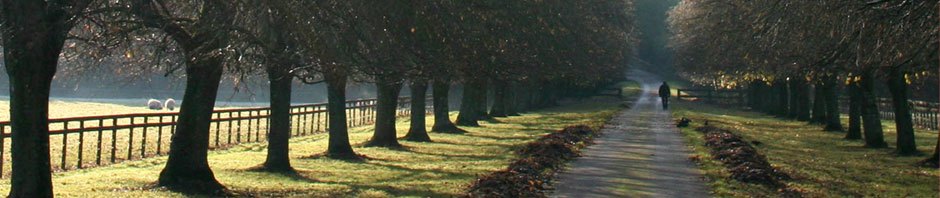
A View of the ValleyThe first day of a journey can be special.  There is a wonderful mix of excitement, hope, and expectation.  We set out with a sense of purpose and direction.  We are on a path to the foot of the cross.  No turning to the left or to the right.  No wandering about.  No meandering.

This is not to say that every journey to the foot of the cross is the same.  Christ was driven through a brutal guantlet along the streets of Jerusalem, carrying the cross with Him.  Mary walked to Golgotha, too, driven by a mother’s anguish and love.  To one side a thief lashed out with jeers and taunts.  To the other side a thief reached out with a plea for eternal mercy.  All of them were in the same place.  They were there on the same day.  Yet for each one the journey was completely unique, and the destination was completely different.

Centuries later, Joachim Neander was on a journey of his own.  As a young man he enjoyed meandering through the hills and valleys near his home.  Neander’s meanders were so well known that a valley came to be named after him–Neander’s valley.  He walked along, admiring the handiwork of his Creator.

A story is told that one day Neander wandered farther than usual.  The sun went down.  Storm clouds formed.  Rain began to fall.  Neander hurried through the darkness trying to make his way home.  Suddenly there was a flash of lightning.  For a brief moment the entire valley was illuminated, revealing that Neander’s next step in the dark could have been his last.  He was at the edge of a precipice and would have fallen to his death.  Frightened by the lightening and terrified by the cliff, he clambered away from the edge.  Safely back on the path, Neander made his way home.  Afterward, he always gave credit to God for saving him that night.

That experience shaped Neander’s life.  His appreciation for creation remained as strong as ever, and his spiritual focus and purpose were sharpened.  In the years that followed he wrote many hymns.  One of them, Praise to the Lord, the Almighty, is a shout of joy for the Creator and His creation.  As we journey into the labyrinth, may we enjoy the creation that God has laid before us, and like Neander, may we encounter God in wonderful and life-changing ways.

Follow the Path!
CARadke


Matching the Meter of “The Wondrous Cross”

Meter of the CrossI am starting this journey with a song in my heart, Isaac Watts’ When I Survey the Wondrous Cross.  From the time I was a child I have always loved this hymn.  I first sang it to the tune Hamburg, but over the years I have sung it using a variety of melodies.

It was common practice in Watts’ day to use familiar melodies for singing hymns in worship.  Indeed, hymn books were often printed without music, while tune books were printed without words.  The key for the worship leader was to select hymns and tunes so that the words and melodies matched.

When I Survey the Wondrous Cross is set in “long meter,” a form of verse containing four lines with eight syllables in each line.  Any tune with a matching cadence can be used.  Rockingham is often used.  Old 100th, a familiar tune used with the Doxology, also fits.  When the words fit the music, they support each other.  As a result, the congregation sings together to learn and proclaim a common message.

On the journey to the foot of the cross there is only one message–the glory of Christ, crucified and risen.  My song and my words must match.  As I walk, I will take my steps to the meter of His mercy.  I will tune my words to the language of His love.  Will you?

Follow the Path!
CARadke


A Path to Follow

Path to FollowA journey has a beginning and an end.  Both are essential in defining the journey, but the course between these points is equally important.  There are many ways to describe the course.  There can be distance on the ground or “as the crow flies.”  There can be “smooth sailing” or “rough going.”  If there is more than one route, there can be “the high road” and “the low road.”  Robert Frost wrote of taking “the road less traveled.”  If the course or the destination is new, it might be called “trail blazing.”  Regardless of the description, though, the traveler always follows a path.

The Hebrews leaving Egypt followed an unfamiliar path, but they were guided by God.  The magi seeking the newborn Christ journeyed to unfamiliar places, but they were guided by a star.  As Jesus’ years of ministry grew imminent, John the Baptist cried out in the wilderness the words of Isaiah, make straight in the desert a highway for our God.  When Jesus spoke to the people He said, “I am the way.”  Throughout history God has always provided a path.  It is a single path that leads to life and blessing.  It is the single path that we are called to walk today.

Jesus is the one way that leads to the Father, and the Cross Labyrinth has only one path.  Jesus’ path led to the cross and the resurrection, and the journey into the Cross Labyrinth leads to the cross and the celebration of Easter.

The path to life has been prepared for us.  God prepared it.  The path to the foot of the cross is available to us.  A path to follow.

Follow the Path!
CARadke


Point of Entry

Point of entryThere is something important and special about doors and entryways.  They are placed to help us reach a destination.  They exist so that we can pass through them.  We go through because of what is on the other side.

The Psalmist understood this when he wrote, “Enter into his gates with thanksgiving, and into his courts with praise: be thankful unto him, and bless his name.”  (Psalm 100:5)  Entering through God’s gate leads to a place of thanksgiving, praise, and blessing.  Jesus tried to help us understand it more when He instructed, “Enter in at the strait gate: because strait is the gate, and narrow is the way, which leadeth unto life, and few there be that find it.”  (Matthew 7:13a, 14)  To avoid any confusion, Jesus explained further, “I am the door: by me if any man enter in, he shall be saved, and shall go in and out, and find pasture.” (John 10:9)

Jesus Christ is the door and the only entrance to life eternal.  Similarly, on our pilgrim journey into the Cross Labyrinth, there is only one entrance.  We can know that there is a path and we can even know that it leads to the cross, but we cannot walk the path or find the cross unless we come in through the entrance.

When we know the point of entry for our journey, we can take our first step with confidence.   It doesn’t mean that we know all of the twists and turns that the road will bring.  It doesn’t mean that we know the challenges and blessings that wait at our destination.  But on this journey, it does mean that we know our goal, and we know that this step can take us there.

Follow the Path!
CARadke


The Reason for the Journey

Let me start by saying that I am a Christian.  The Bible is my guide for living, so it should come as no surprise that I don’t order my life around the teachings or sayings of other philosophers.  I don’t see the world through their eyes.  For instance, Confucious said, “A journey of a thousand miles begins with a single step.”  In a physical sense there is some truth to that saying, but unless the traveler knows the destination and has a direction, that step is leading nowhere.  A journey of any length begins with a destination in mind.  To simplify even more, a journey begins with a reason.

A pilgrimage to the foot of the cross begins with the destination in mind.  The reason for the journey is honoring Jesus.  Begin with the reason, and then take that first step.

Follow the Path!
CARadke


Greetings, Pilgrims!

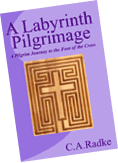
Welcome to Journey Notes, a blog of pilgrim thoughts relating to the Cross Labyrinth.  Living on a retreat property where we have a full sized path to walk has been such a blessing!  Since the time that it was installed I have had the privilege of introducing so many people to this narrow path that leads to the foot of the cross.  I have been moved and I have grown.  I hope that you will grow, too.

Follow the Path!
CARadke